Protected cultivation · Early-stage proposal
Protected Tunnel Farming Expansion
Build on our tunnel-farming experience with a focused crop pilot, testing quality, timing and buyer demand before expanding.
The opportunity
Grow for the right market, at the right time.
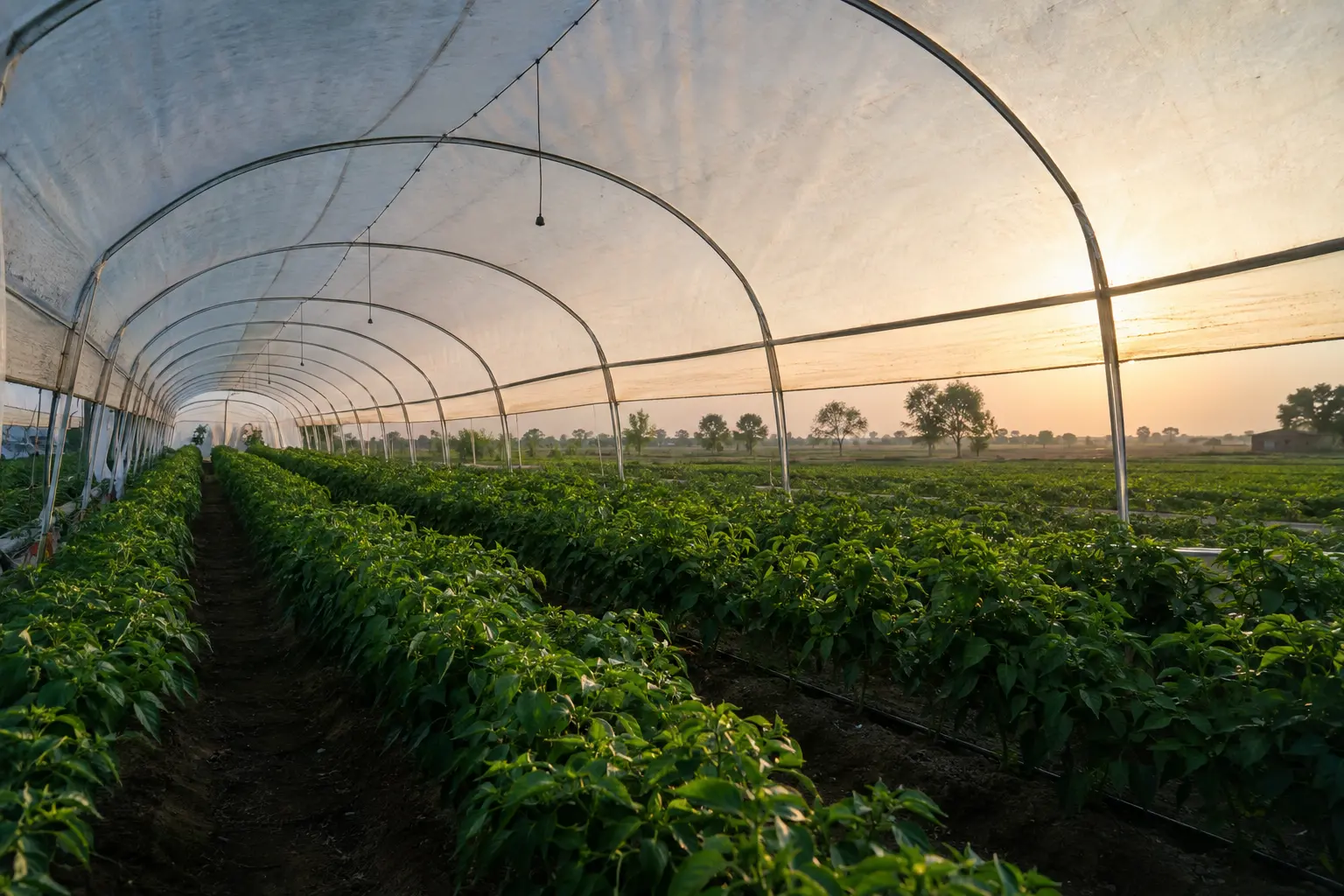
Bandial Farms is already expanding tunnel cultivation. This proposal builds on that experience with a focused pilot: select a crop and selling window, put the right growing systems in place and measure the results through a full crop cycle.
Yield alone will not establish the case. The pilot would also need to show saleable quality, manageable input and labour costs, and buyers willing to pay for the crop. Expansion would depend on those results, not on the area available to plant.
Potential investment includes tunnel structures, irrigation and fertigation, crop supports, planting material, monitoring equipment and working capital for the pilot. A budget would follow crop selection, water testing, a site-specific layout, buyer discussions and current supplier quotations.
A possible partnership
Different strengths.
A shared undertaking.
- Land allocation and access to farm services
- Experience from existing tunnel cultivation
- Field management, labour and crop supervision
- Coordination with farm irrigation and energy systems
- Tunnel structures and cultivation equipment
- Irrigation, fertigation and monitoring systems
- Working capital for the pilot crop
- Buyer relationships and specialist growing expertise
From idea to evidence
Start small.
Learn before growing.
Choose a crop and a buyer
Understand demand and seasonal prices, then shortlist crops suited to the farm’s climate, water and operating experience.
Run a focused pilot
Track the full crop cycle: saleable yield, quality, labour, inputs, water use, disease pressure and actual selling prices.
Document what works
Set out the variety, planting calendar, feeding, crop protection, harvest and delivery practices supported by the pilot.
Expand only when repeatable
Add growing units in stages, once crop performance, costs and buyer demand support a credible case for more acreage.
Before a commitment
What we need to establish.
- Water quality, available volume and filtration requirements
- Crop and variety selection for the intended selling window
- Buyer demand, quality standards and delivery expectations
- Tunnel design suited to local heat, wind and ventilation needs
- Labour availability and technical supervision
- Crop protection, residue testing and food-safety requirements
Key risks and proposed responses
What needs a closer look.
Changing crop prices
Test demand before planting at scale. Assess staggered planting and avoid depending on one crop without evidence of repeat sales.
Heat and ventilation
Assess structures against local conditions. Build ventilation and monitoring into the pilot rather than assuming a standard design will suit the site.
A demanding growing cycle
Assign clear crop supervision and record growing practices. Use the pilot to establish the actual skills, inputs and labour needed.
Expanding too quickly
Agree the performance needed before adding each growing unit. Keep expansion tied to measured crop results and a viable route to buyers.
This is an early-stage opportunity brief, not an investment offer or a guarantee of returns. Capital cost, revenue, yield and payback assumptions must be validated through current vendor quotations, buyer discussions and a project-specific financial model before any commitment.
Further reading
Context for the conversation.
These sector resources provide background, not a feasibility study for this venture. Current requirements and project assumptions still need to be checked.
Let’s explore the fit
Could we build this together?
Tell us where your experience, capital or market access could contribute. We can discuss the proposal, the questions to investigate and a practical first step.
 Discuss this venture